

You've ignored this film. It will no longer appear as a recommendation. View ignored films.
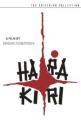
You've decided to remember Harakiri for later. You can see all your remembered films here.
Summary: Peace in 17th-century Japan causes the Shogunate's breakup of warrior clans, throwing thousands of samurai out of work and into poverty... (imdb)

I pinned this move about halfway through and I could tell how great it was going to be, even with the brilliant twist beginning. The last half hour really took me in with all the swordplay and instantly made it one of my favorite movies of all time. Again, another brilliant tale of conservatives bending traditions to their agenda, and of course, when the hypocrisy is thrown right in their faces, they turn to the way of the gun to silence the truth.
I would have given this closer to a full 100 if it had been tighened up a bit. It could easily be 20 minutes shorter with another trip to the editing room. As it stands, it's still a good morality tale, a commentary on modern (and not so modern) politics, and the realities of having to deal with an ever changing world that can leave certain members of society behind. Highly recommended, but bring your patience for a slower than necessary presentation of a good story.
Such an insightful look on samurais and well humans in general. It also has wonderful sword fighting and is completely brutal. Brilliant in other words.
A movie about death, and the downfall (of samurai) in the broadest sense. A magnificent movie full of symbolism and subtle tension, though losing a lot of it's momentum somewhere after the middle, regains it's power towards the end.
This film's luxurious pacing accentuates its severity, and allows for a wonderfully nuanced performance to come through what could easily have been a straightforward story. Nakadai's manic disposition passes effortlessly from extreme stoicism to humorous resignation, which makes his characters evolution interesting despite a conclusion that is clear from early in the film. The shifting world in which it is set struck me as eternally relevant, as it shows time displacing the individual.
Despite being shot in black and white in the 1960s, the bamboo sword seppuku scene succeeds in being more brutal and harder to watch than anything Takashi Miike has ever done.
Easily one of the best samurai movies ever made. Flawlessly fits into the genre while, at the same time, dismantling the (often romanticized) concept of the samurai. The story unfolds slowly at first, but the last hour was riveting, due in part to Kobayashi's innovative direction and Nakadai's compelling performance. Kobayashi certainly gives Kurosawa a run for his money.
Beautiful and profound morality tale in the samurai sub-genre, a sensitively told drama of Shakespearean proportions, aided by its director's usually stunning camerawork.
Beautiful tragedy about a man beaten down by life and angry at the corrupt bureaucratic types that hide behind their authority. Kobayashi's photography is really a sight to behold, with exquisite framing and an expressive use of lighting.
The film has the best scene of sword fighting I've ever seen. But there's much more than that. This is a profound study of human needs. One of the many masterpieces of Masaki Kobayashi.
A riveting study of honor and humanity. The story unfolds in a brilliant way, where nothing is ever quite what it seems, and each piece of information along the way makes you question everything that has come before.