0
Fritz Kampers

Total Credits at Criticker: 63 (Actor), 1 (Director)
Find more information about Fritz Kampers at The Internet Movie Database
Titles you haven't rated - Actor (63) | Director (1)

A free adaptation of Gottfried Keller's novella “Romeo and Juliet in the Village,” which reveals elements of the Nazis' blood-and-soil ideology: Vroni and Friedel, the children of feuding farmers, fall in love. But Vroni is promised to the wealthy innkeeper Paust.

Based on an 1884 novel by Julius Stinde, it is a family chronicle set in late nineteenth century Berlin.

A rookie detective's first case is to observe an engineer, but she behaves so clumsily in her job, that she's mistaken for a thief and con artist.

A concert pianist, the romantic idol of many women, is seduced away from his wife. The seductress's husband takes in the pianist's wife, and all four pretend to be happy with the new arrangement.

A continuation of the film “Familie Buchholz”: To Wilhelmine Buchholz, the concept of a marriage based on love is somewhat scary, although she hears again and again that this is the “modern” method to a happy marriage. Her daughter Betti seems to agree, as she shows no interest in her middle class companions; she only loves the painter Holle. To once again restore family harmony, Mr. Buchholz sends his wife and daughters to Helgoland.

Charlie, a very gifted, young acrobat, cannot find employment. A dancer and colleague, whom he trained, has gotten him a job as a stagehand at a vaudeville theatre. After a number of chaotic events and some highs and lows - none of which ever discourage him - his hour arrives: an act can't go on and “Akrobat schööön” can finally make his grand entrance.

Gabi is devastated when her fiance leaves her for another woman. She finds solace with the artist Paul who takes her to a wonderful winter resort in the Alpes. What Gabi doesn't know: Paul has a wife and two children.

Remake of an Ernst Lubitsch silent comedy, about a farm boy who is fond of two sisters, one of them beautiful, and the other, not so much.

Robert is almost the epitome of a head waiter: Politely and courteously, he informs guests about the goings on in the stock market as well as what's going on in politics, the world of culture, and the economy. Now, Robert is in love with Lilo, the daughter of Hillmer, who owns a fashion salon, and wants to marry her. Lilo is all bananas for the idea. She doesn't know what Robert does for a living; only that he does business with her father.

Bohemian landed gentry around 1850: A young baron challenges his reckless rival to a duel, but after the latter misses, he reserves his own shot, intending to use it only when his opponent has come to value his life. The rival undergoes a transformation and finds happiness in a serious love affair. At the pleas of this woman, the vengeful baron finally relents.

High up in the mountains, a peasant family drags themselves through the towering granite blocks with all their possessions to make a new home for themselves. The mountains, however, have no interest in seeing them make a home up there: for months, huge boulders have been crashing down around them; trees have been falling on the walls of their new home and collapsing it … and more than one time.

Set largely in France, England, and Spain, the film chronicles the plight of Germans caught by the outbreak of war and their frantic attempts to return to the Fatherland to join the battle. All of Germany's enemies receive equal disdain. The British, the French, the Poles, and the Jews are portrayed respectively as warmongers, profiteers and cowards. In the end, all that is important is returning to Germany.

During the Seven Years' War, Prussian Major von Tellheim sacrifices his own fortune to save a Saxon estate from being plundered. After the war ends he is discharged and left penniless when the government suspects his noble deed was actually due to a bribe. Believing his lost honour makes him unworthy Tellheim breaks his engagement to Minna von Barnhelm, but she tracks him down to a Berlin tavern to win him back.

It's bowling night again in Dingelfingen am Rhein. Hotel owner Kiesewitz has set a new record in bowling and is crowned the winner. Now he is to represent the club at the Oktoberfest in Munich. But at home he makes life difficult for everyone, especially his wife and his two daughters.

The gifted painter Alexander Poschinger receives a financial windfall. His friends Paul and Sepp, both painters, too, aren't in the slightest bit surprise by his success, since he only paints rich women. These women come to Alexander, because whomever he paints looks pretty on the canvas. But valauble paintings from an earlier time show quite well what Alexander is capable of. In a shopping center, Alexander makes the acquaintanceship of a women, with whom he immediately falls in love.

Two vagabonds escape from jail and steal jewelry at a wedding to help a poor innkeeper pay his debts.

Mayor Eberhorn is known as a womanizer to everyone in the village. Katchen, his wife, is constantly trying to convert him to a proper way of life … but in vain. When one morning, Casanova finds a stroller with a clever slogan referencing his affairs at his front door, Eberborn seeks revenge. Top suspects for the prank? The “Spassvogel”: seven friends led by the former sailor Hannes Strobel.

The sawmill owner Ramin disappears from one day to the next. Concerned, his family learns from the bank that he wrote a check to an agent named Frisch. He supposedly wanted to use it to buy a good. However, that did not happen. When Ramin's body is found, the police stumble upon Ursula von Tweel, who knew the dead man.

A farmer opposes his daughter marrying a young music teacher (who a visitor from town also has eyes on) and prefers she marry a rich shopkeeper.The drama culminates with a fire in a barn where the touring Vienna Boys Choir are rehearsing.

This Nazi propaganda film chronicles the rise of the German Air Force ("Luftwaffe") from World War I until Adolf Hitler took power in 1933. (imdb)

Four soldiers on leave from the German army refuse to participate in the leftist October 1918 revolution in Berlin.

Old Meiseken, a gingerbread baker, has been dead for three years, but his bosses don't know that. They've been paying him his pension all this time, unaware that his former landlords have been cashing the checks. When, one day, the assistant head of the bakery, Tony, pays a visit to Meiseken's place to get a hold of an old recipe, someone's got to play the part of Meiseken! The fraud blows up in the landlords' faces; but in the end, Tony gets the recipe book and even a new bride.

Russia, 1917. Revolution is in the air. The Sevastopol anchors In Saint Petersburg. The sailors thirsty for women and celebration.

To take a revenge on countess Laura, who slapped him at his proposal, the Governor of the occupied Poland gets her fall in love with a poor student, and exposes him during wedding banquet.

At the start of the 18th century, British Queen Anne, inspired by her German born lady in waiting, emancipates the country's farmers and peasants.

Based on a 1932 novel City of Anatol by Bernhard Kellermann. The film is set in a small city in the Balkans, where the discovery of oil leads to a major boom.

In a poor Berlin neighborhood, a horse used in the WWI cavalry is threatened with slaughter so two sinister types can make some money .But a flower seller, her grandfather, and some other nice people try to save the honorable steed.

Rosika, a girl from Genoa, fled her innkeeper stepfather after he tried to abuse her. She finds refuge - and a job as well - in a traveling circus. Cherubini, the owner of the big top, falls in love with the lovely young woman and makes her the star of the show 'Light Cavalry'. But unfortunately for him Rosika's heart beats for Geza, the stable boy.

Sándor Barinkay joins the gypsies en route to his home village hiding his real identity as an Hungarian nobleman, whose parents were sent to exile. He claims his former properties, now taken by a pig merchant who plays the fool to the villagers' delight. Yet this man has an interesting daughter, and there's also the beautiful gypsy Saffi to consider. And a family hidden treasure to be found. (imdb)

A senator from Hamburg, frozen in old-fashioned gentility, attempts to consolidate his cigarette factory by marrying off his daughter to the son of his competition. His eccentric, nosy old sister, with no life of her own back in southern Germany, sends him a lawyer to keep an eye on the going-ons in the house.

A country postmaster and stagecoach operator in 1838 is wary about his daughter's involvement with a construction foreman building the first German railroad there.

Returning after three years at sea, a young sailor finds his boyhood sweetheart is now engaged to his old friend, a challenge to their comradeship.

While on land, three sailors get entangled with the same woman - very much aided by her little brother.

In the year 1810, the Tyrol is suffering under French occupation. A servant, who believes himself oppressed and disenfranchised by the peasants, dreams of being allowed to play Christ in the yearly Passion Play. Instead, he is forced to play Judas and soon the lines of reality blur: he betrays the location of Andreas Hofer, hidden by the farmers, breaks under the weight of his guilt and suffers Judas' fate.

The niece of a prying clerk, who fancies himself a great investigator, plots with her boyfriend to trick the uncle into locating a supposed kidnapped heiress, this premise set against Bavaria locales, with music, dancing, and slapstick.

A detective inspector dismantles a smuggling organization by infiltrating the gang. Not a particularly exciting crime film.

Hans Steinherr will one day inherit the family steel-mill but prefers a living as a musician. He ends his relationship with ingenue peasant's daughter Hanne and ventures into the big city where he meets a famous singer.

Anni happily starts working as underground ticket seller. A passenger in a rush leaves owing part of the ticket. He happens to be a postal service night pilot. He pays his debt and they start dating, in spite of their opposite schedules.

A young medical student returns to his Tyrolean home to find out that Napoleon's troops have taken over the area and that his mother and sister have been murdered.

Set in a small German state before 1914, private Gustav suffers from his sadistic drill officer Krause both in the barracks, and as a co-suitor for Emma, the butcher/innkeeper's daughter. Another triangle is Lieutenant Gernsbach planning to marry his superior's daughter, while also dealing with lovely bar-singer Vera.

The night before his wedding George gets drunk and marries a chorus girl. Her boyfriend appears, they fight and are believed dead, so she is now "the bridegroom's widow" (die Bräutigamswitwe). When they both come back one after another they must hide from the Police as they believe they have murdered each other, while the inspector believes there are ghosts in the house.

A old German mine was split in two after the end of WWI because of the new border. In the French part a fire breaks out. The German minwers send a rescue group in, helping their French comrades... (imdb)

This is the German version of Gloria with Gustav Fröhlich & Brigitte Helm in the leads. A French version was filmed simultaneously with André Luguet & Brigitte Helm in the leads. (imdb)


Viktor, the son of Prince Gagarin, becomes engaged to the young Natasha, which Governor Malyutov, whose ward he is, does not like at all. So he does everything in his power to separate the two.
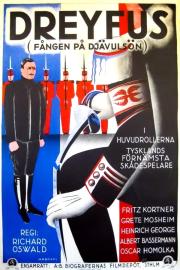
In late nineteenth century Alfred Dreyfus, a French army officer of Jewish heritage, is falsely accused of espionage. Found guilty of treason he is drummed out of the army and sent to prison on Devil's Island.
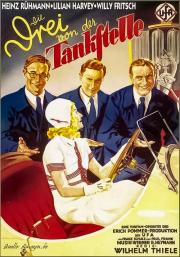
Willy, Kurt and Hans are broke, so they sell their car and open a filling station. Then they all fall in love with the same girl. (imdb)

A group of German infantrymen of the First World War live out their lives in the trenches of France. They find brief entertainment and relief in a village behind the lines, but primarily terror fills their lives as the attacks on and from the French army ebb and flow. One of the men, Karl, goes home on leave only to discover the degradation forced on his family by wartime poverty. He returns to the lines in time to face an enormous attack by French tanks. (imdb)
In the year 1914: The assistants of cobbler Lehmann compete for the affections of his daughter Frieda. Actually she's in love with her ambitious cousin Fritz, but the cunning Franz knows how to string her along. When Fritz gets drafted, Frieda gives in and marries Franz. Soon Fritz is declared missing and the old cobbler dies of grief. Along the way Franz, who dodged the military service, earns his money with large-scale racketeering.

Gentlemen Among Themselves (German: Die fidele Herrenpartie or Herren unter sich) is a 1929 German silent comedy film directed by Rudolf Walther-Fein and starring Hermann Picha, Lydia Potechina and Maria Paudler.

Katharina Knie is a 1929 German silent drama film directed by Karl Grune based on the 1928 play of the same title by Carl Zuckmayer.

Es zogen drei Burschen (1928) is a German silent comedy film directed by Carl Wilhelm. Also known by its alternative German title Drei Seelen und ein Gedanke, the movie is a lighthearted farce famously featuring an early-career performance by the legendary actor Hans Albers.

Robert and Bertram (German: Robert und Bertram) is a 1928 German silent comedy film directed by Rudolf Walther-Fein and starring Harry Liedtke, Fritz Kampers and Elizza La Porta. The film was shot at the Staaken Studios in Berlin with sets designed by the art directors Botho Höfer and Hans Minzloff. It is based on the 1856 Gustav Räder play Robert and Bertram about the adventures of two wandering vagrants.

An international gang of thieves and swindlers decide to move their criminal operation to the Teutonic city of Cologne but Tom Wilkens one of the best agents of the international police, is not far behind and leads an investigation to unmask the criminals. (imdb)

A spirited young countess defies social conventions by climbing trees and dancing with peasant children. During a countryside outing, she meets a charming stranger-unaware he's a prince-and later encounters him again at court.

In the Ruritanian kingdom of Leuchtenstein, the old ruler has just died. His subjects are a bunch of intrigants, and his only real friend was the Baroness Windegg (Olga Tschechowa), a kind-hearted, witty, and very attractive woman, who however was not much loved by the Leuchtenstein upper class. And as these are only interested in getting better positions and other wealths after His Excellency's death, the baroness invents the story that the old ruler wrote his memoirs before his death.

Heinz Sattorius leads an extraordinarily life wining, dining with lots of women. His uncle is the provider of the funds for his lifestyle. When his uncle grows tired of Heinz wild behavior all his friends disappear overnight.

Adaptation of Goethe's historical play "Götz von Berlichingen and the Iron Hand", set in the Holy Roman Empire.

"Comedians" - Axel Swinborne is a celebrated stage star. Although much in demand, he now wants to recover and travel by train on vacation. He leans out of the window at full speed, as happens a momentous mishap: his jacket gets tangled on the window lever so unhappy that it ejects the suction force out of the window.

After the revelation that Georg has seduced her, Maria is driven away by her father. Georg, fearing the wrath of Maria's father, has swiftly abandoned the girl and left for the mining town of Sankt Anton, where he expects to hide easily amongst the large population of colliers. Maria must care for herself, and ends up in Sankt Anton, where she attempts to rebuild her life. There, she gets to know Thomas, and soon the young people are engaged. When Georg and Maria meet again, drama ensues. (imdb)
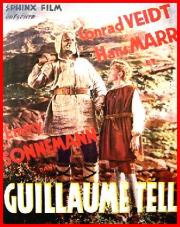
William Tell (German: Wilhelm Tell) is a 1923 German silent adventure film directed by Rudolf Dworsky and Rudolf Walther-Fein and starring Hans Marr, Conrad Veidt and Erich Kaiser-Titz. The film portrays the story of the legendary Swiss national hero William Tell. (en.wikipedia.org)
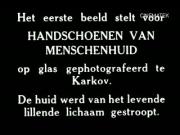
This anti-communist propaganda film discusses the revolutionary curse of communism in the Soviet-Union shortly before and after the fall of czardom in Russia, told from the point of view of Belarusians in exile. Anti-communist copy in color which has been discovered, restored and printed by the Royal Belgian Filmarchive.

In Berchtesgaden 15th Century: Between Lambert, son a bailiff, and the farmer's daughter, Jula, a developed Love relationship. But their fathers come about through a misunderstanding the grazing rights in a bitter dispute. As the chalet of Julas Father burns down, Jula abused and her deaf-mute brother is murdered, the farmers begin a bloody insurgency against the Berchtesgaden Prince Provost Pienzenauer.
Streaming data provided by 