Maxim Gorky

Total Credits at Criticker: 14 (Writer)
Find more information about Maxim Gorky at The Internet Movie Database
Titles you haven't rated - Writer (14)

This colourful, music-filled and sensual melodrama based on early stories by Maxim Gorky tells the fatal love story between the beautiful and rebellious girl Rada and the handsome horse thief Zobar (imdb)
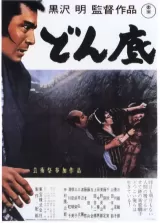
In a slum flophouse, a collection of beggars and thieves bewail their lot in life, and Osugi, the landlady, fights with her sister, Okayo, over the man they both desire, the thief Sutekichi (imdb)
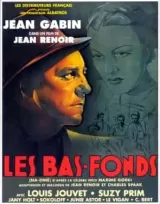
The winner of the Louis Delluc Prize as the most outstanding French photo-play of 1936, as selected by the Young Independent Critics of France (an organization and not a description.) The film treats the imprisoning hold of poverty; the disheartening odds of people rising from such social despair, and the ease in which those in the upper spheres of Society may descend. (imdb)
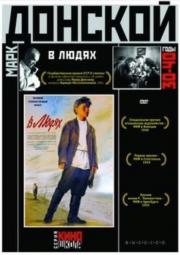
Peshkov is working for a middle class family, ostensibly as an aid to the architect son of the family, but the mean spirited mother keeps him from learning anything and insists on him doing menial jobs. (imdb/comments)
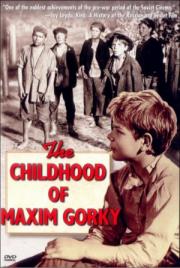
Tells the story of Aleksei Peshkov a 12 year old boy, living in 19th Century Russia, who would later be known as Maxim Gorky, possibly Russia's most famous and celebrated novelist and dramatist... (IMDB Comments)

Loosely based on Maxim Gorky's novel, and, while the mother symbolizes the ideology of the revolution and the prospects of an untried utopian state, she also possesses the traditional patriarchal ideologies of the crumbled regime, which creates a unique commentary on the state of Soviet society, filled with chaos and revolutionary dreams. (SenseOfCinema.com)

Director and writer Gleb Panfilov adapted Maxim Gorky's play Vassa Zheleznova for this theatrical film that recounts Vassa's iron rule over a dissipated merchant family several years before the 1917 revolution. (allmovie.com)
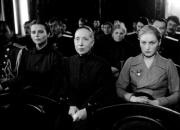
The film takes place between 1894 and 1902. By relating certain pages of Russian History, it throws light on today's events and reveals the profoundness of Gorky's tragic and contradictory work. (festival-cannes.fr)

Idealistic young Koichiro is the sensitive artistic type; he longs for success as a violinist. Worse luck, he's a small-town boy from the Hokkaido provinces: if he hopes for success as a fiddler, he'll have to up sticks (fiddlesticks?) and move to Tokyo. Koichiro's practical-minded father Yasushi is dead-set against this, and Yasushi has an even better reason for his argument: Koichiro has a wife and young daughter. (imdb)

Boles (2013) - Short Film
Filip is a writer who lives in a poor neighborhood but dreams of a luxurious lifestyle. One day, a prostitute who he tries to avoid by all means asks him to write a letter for her fiancé. The problem is, she will not stop asking for more... (animamundi.com.br)

My Universities (Moi universiteti) is the last installment of Russian director Mark Donskoy's "Maxim Gorki" trilogy. Having endured a painful youth in My Childhood (1938) and a torturous sojourn as a serf in My Apprenticeship), future writer Gorki (Alexei Lyarsky) reaches maturity with an insatiable desire for personal and artistic freedom. The "university" of the title is actual the school of Hard Knocks, as Gorky goes to work in the shipyards. (imdb)

Burevestnik (2004) - TV Special
The conflict with the plant owner makes Tade and Gijua to leave the town and return to their home village. There, Gijua fells in love with Tade's sister Tasya. A day before their wedding, Tasya is taken by the people... (themoviedb)

The drunken denizens of a Russian village dislike a Jewish shoemaker, who bonds for protection with a burly boatman.