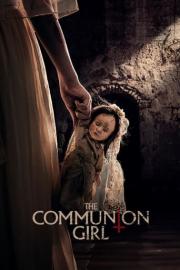
La niña de la comunión

The Communion Girl builds on very familiar elements from recent Spanish horror: a small town, adolescence, an unsettling childlike presence, a doll and a past that does not seem completely buried. On paper there is not much that feels new, but Víctor García makes the film work better than it initially seems thanks to an effective atmosphere and several sequences where the threat becomes more than a simple jump scare.
The first thing that bothered me was the music. The story is set in 1987, yet the soundtrack mixes references that do not always fit either chronologically or as character logic. The use of later bakalao culture already feels off, but even more noticeable is the way a character associated with that scene suddenly moves into a completely different musical register without much reason. It feels less like people listening to what they would actually have listened to at the time and more like a present-day selection of recognizable songs from the 1980s and early 1990s.
That does not ruin the film, but it slightly weakens a period setting that otherwise works well. The town, roads and interiors are convincing, without turning late-1980s Spain into a nostalgic postcard.
Carla Campra holds the center of the story well, but Aina Quiñones as Rebe surprised me the most. At several points, her reaction to fear feels unusually natural for a young horror film. There is confusion, disbelief and panic without the exaggerated performance the genre often relies on. When I believe the person who is terrified, the scene works far better than any apparition designed only to make the audience jump.
That is one of the film's strongest qualities. Its best moments are not the most obvious scares, but those that begin with an apparently ordinary situation, introduce one strange detail and then move the threat away from where we expect it. A few sequences genuinely got under my skin because they understood anticipation and did not rely only on a loud sound.
The film also works when it treats the supernatural as something that leaves a mark. It does not feel like a succession of visions that could simply be explained away as suggestion, fear or drugs. There is a sense that people who come into contact with something they do not understand are affected in a deeper way. That gives the threat continuity and stops each horror scene from feeling disconnected.
The vulnerability of the young characters also works. Around them are difficult families, unreliable adults and everyday aggression. The horror therefore does not depend entirely on a creature or a curse: things were already damaged before anything strange arrived.
The problem comes when the film starts trying to explain itself too much. As long as the story works through legend, apparition, doll and unanswered questions, it has a genuinely unsettling quality. The more it organizes its mythology and gives a concrete cause to every element, the less room it leaves for the imagination. It never completely destroys the fear, but it does domesticate it.
That is a common weakness in this kind of horror: the unknown is usually scarier than its instruction manual. It is especially noticeable here because the most effective images are very simple. A childlike figure, an ordinary object made threatening, a sound where it should not be, or someone reacting as if they had seen something impossible can carry more power than many later explanations.
There are clichés too. The group of young people, initial disbelief, investigation into a dark past and certain mechanisms of the supernatural threat all feel familiar. Víctor García does not reinvent the genre, but he directs with enough skill to make those elements work. There are good staging decisions, cinematography that suits the tone and sound design that creates real tension at its best.
The Communion Girl gradually won me over. It began as a fairly conventional Spanish horror film with musical choices that pulled me out of the period, but it eventually delivered several genuinely effective scares and a supporting performance that impressed me. Not everything fits, the mythology is ultimately explained too much and there is not a great deal of originality, but there are moments of real fear.
It is not among the very best Spanish horror films, but I would not dismiss it as forgettable either. It has a recognizable visual identity, a convincing small-town atmosphere and several sequences that work because they understand something basic: fear is more effective when we first believe the person experiencing it. Whenever the film stops worrying about explaining and concentrates on unsettling us, it works very well.
Mini Review: The Communion Girl builds on very familiar elements from recent Spanish horror: a small town, adolescence, an unsettling childlike presence, a doll and a past that does not seem completely buried. On paper there is not much that feels new, but Víctor García makes the film work better than it initially seems thanks to an effective atmosphere and several sequences where the threat becomes more than a simple jump scare. The first thing that b...