0
Atsushi Watanabe

Total Credits at Criticker: 17 (Actor)
Find more information about Atsushi Watanabe at The Internet Movie Database
Titles you haven't rated - Actor (17)

A story of two mates, a pitcher and a catcher on a pro-baseball team, devoted to their game, bikes, girls and having a good time. When they meet a girl who is still mourning the death of her boyfriend in a bike accident, they try to help - though her beauty means their motives may not be entirely altruistic!
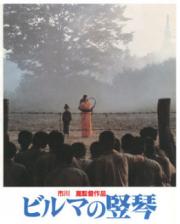

After World War II, when Okinawa was under control of the United States, the local yakuza prospered. But when Okinawa is returned to Japan, the mainland yakuza tries to take over; the local yakuza tries to compete. Now sides are drawn among the local yakuza guys who used to be best friends since their childhood, and brother fights brother. It results in the biggest yakuza war in Okinawa.

A Japanese stage actor in Yokohama is terminally ill and is determined to end his life, but doesn't know that he has inherited a large sum of money from Switzerland.
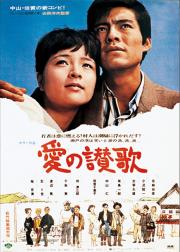
In a small harbor village on a quiet Japanese island in the Inland Sea, Haruko is a young woman who raises her two younger sisters alongside some of the more colorful members of the local community, such as the doctor, the ferryman, the local shop owner, and the shop owner's son who happens to be Haruko's boyfriend. One day, the shop owner's son decides to leave the island in search of work and his destiny in Brazil, but if he leaves, where does that leave Haruko? Her future is now uncertain.

The mischievous Yasukichi's island home is experiencing a recession, and he saddles himself with debt to help his fellows.
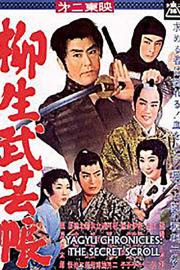
Two groups are after the legendary Yagyu Secret Scrolls. A princess of a disgraced clan and her loyal servant want it to clear their family's name. And a rival clan wants it to destroy the Yagyu family. Only master swordsman, Yagyu Jubei stands in their way. What is the secret that is hidden away in the scrolls? (letterboxd)

A weary bureaucrat in post-war Tokyo learns he has terminal stomach cancer, forcing him to confront his decades of a monotonous, meaningless existence. Searching for purpose in his final months, he breaks away from his rigid routine and vows to navigate corrupt bureaucracy to transform a desolate wasteland into a public playground for local children.
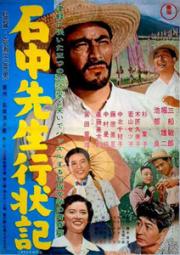
Based on an original story by Ishizaka Yojiro, the film has a reflexive element by which it comments on its own process of taking the materials of everyday life and transforming them into narrative. This realist conceit is enhanced by the rural setting, which is photographed with some care, including the mountainous landscapes and the farmhouse interiors. (Catherine Russell)

Yuzo and his fiancée Masako spend their Sunday afternoon together, trying to have a good time on just thirty-five yen... (imdb)
Made as World War II wore on, This Happy Life is pure wartime propaganda, but of an unusual sort. There's little, if any, militarist feeling expressed - although the most sympathetic character preaches the joys of German cuisine. Rather, the film's mission is to instruct the home front, in great detail, on how to make do with the odd scraps of food and supplies available, and to demonstrate in various ways that people can be happy no matter what straitened circumstances they find themselves in (KG)
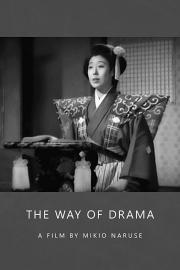
Set in the Osaka theater world, the story is dominated by a self-righteous troupe leader (Roppa Furukawa) who bravely risks his popularity by selecting only plays that support the Japanese military cause, and who decides to break up the love affair between his star actor (Kazuo Hasegawa) and a shamisen player (Isuzu Yamada) in order to purify the actor's commitment to his craft. (Dan Sallitt)

Many years ago, Atsushi Watanabe was the guy who lowered the crossing barrier on the local railroad. Kamatari Fujiwara and Akira Kishii were railroad employees who almost got his daughter, Setsuko Himemiya, killed. Watanabe was promoted to station master. The other two men were fired, but kept on by Watanabe. Now they want to use the talent competition at the local festival to launch a career as professional entertainers.
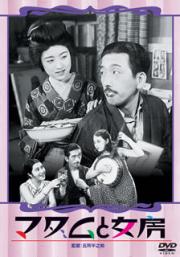
One of Japan's first sound pictures,it examines the home lives of white-collar workers.
Ishikawa goemon no hoji (1930) - Short Film
The adventures of a modern day descendant of a famed Edo era thief are the basis for this short supernatural comedy romp.
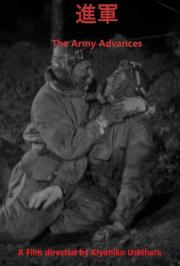
A farmer's boy, obsessed with his balsa-and-paper flying models and with dreams of real aircraft, develops a friendship with the daughter of the local squire, who introduces the lad to her pilot brother and his flying officer friends; through hard work, and despite the handicap of a lowly class status, he eventually succeeds in qualifying as a pilot and joining the air force.

Fighting Friends (1929) - Short Film
This early short (and silent) film by Japanese master Ozu seems to be the perfect illustration for XVIIth century French poet Jean de La Fontaine's fable "The Two Cocks" : "Two cocks in peace were living, when / A war was kindled by a hen." It is the simple story of two friends who live together in a poor tenement and who share about everything in life (food, hopes, work...). Everything goes well until they gallantly rescue a young (and pretty) woman injured in a road accident. (imdb)
Streaming data provided by 