0
Tamae Kiyokawa

Total Credits at Criticker: 9 (Actor)
Find more information about Tamae Kiyokawa at The Internet Movie Database
Titles you haven't rated - Actor (9)
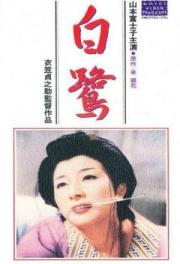
The story follows Oshino, a geisha who is trying to start a new life with a lover who is a painter. However, her past filled with debts and pimps catches up to her. (imdb)

A human billboard and a shoeshine girl met a kid of five who got separated from her mother at a street of Ginza. They try to find a mother in a crowded town.... (KG)

Tanuma Kandayuu is a high class samurai of the house of Nabeshima. He finds a lavish board of Go at Kinbei's store. He recommend Kinbei to offer it to his lord. Kinbei hesitates at first, since he knows the board has some weird history. It is believed that one game played on the board requires one death. (imdb)

Another period piece, with legendary characters and vaguely martial overtones. The script has some wit, and the screenwriter makes a small effort to give the characters dimension, but there's really not much that Naruse can do with this material, other that create beautiful deep-space compositions for the exterior shots. (Dan Sallitt)
Made as World War II wore on, This Happy Life is pure wartime propaganda, but of an unusual sort. There's little, if any, militarist feeling expressed - although the most sympathetic character preaches the joys of German cuisine. Rather, the film's mission is to instruct the home front, in great detail, on how to make do with the odd scraps of food and supplies available, and to demonstrate in various ways that people can be happy no matter what straitened circumstances they find themselves in (KG)

It was supposed to be about a love story, but it was and was not. An aircraft mechanic working for the government is matched by his boss with the latter man's daughter (Setsuko Hara) who is both beautiful and aggressive. Yet, he picks a woman who is less assertive as his bride. (imdb)

As the teenage bus conductress O-Koma, Takamine might best be described as beatification personified, and it is her continuously cheerful demeanor that effectively masks the film's underlying current of satirical bitterness. (Slant Magazine)
The story begins with a Christian father and elementary school headmaster in a snowy village in Hokkaido. He finds a blind girl near Sapporo and takes her in. His wife is unhappy with his decision, but he does not care and proceeds to educate her. Attending a concert of Beethoven's Pastoral Symphony one day the adopted daughter is inspired. (imdb)
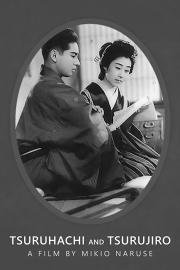
As the titular, exceedingly popular performing duo (respectively a samisen player and a Shinnai singer) they enact a tragicomic tale of unrequited love that--save for a deeply affecting, pathos-ridden final scene--is far removed from director Mikio Naruse's usual cinema obsessions. (slantmagazine)
Streaming data provided by 