
The Nun
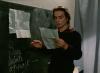
One might not associate Gaullism with placing an actual artist in charge of the Ministry of Culture, but André Malraux was appointed to that department of the government in 1958, by de Gaulle himself. And it fell to him to decide the fate of Jacques Rivette’s controversial film SUZANNE SIMONIN, LA RELIGIEUSE OF DIDEROT, to give it its full title. Rivette’s film is based on a novel by the significant Age of Enlightenment figure, Denis Diderot. In Diderot's days, scepticism about the Church was less respectable than in the 1960s. Rivette seems to have been more interested in raising questions about bigger topics. fra paolo Favourite Jean-Luc Godard did sterling work in helping with the production of the film, while Malraux set aside a ferocious campaign by French conservatives and elements of the Catholic Church in France to prevent its release. It was first shown at the Cannes Film Festival, and on initial release averaged a weekly audience of 33,000 in a mere five Parisian cinemas. It must have sold out every showing for five weeks.
In Rivette’s hands Diderot’s book becomes quite a fascinating film. Diderot sought to see the world through his female protagonist’s experience and I think it’s fair to say that Rivette does likewise. Not being a woman, I cannot comment about how successful it is. I did feel great sympathy for the nun of the title, Sister Saint-Suzanne (Anna Karina), who genuinely is caught in an impossible situation owing to the Patriarchal society into which she is born.
There’s a crucial piece of information that we learn quite early in the film to explain Suzanne’s predicament. I won’t give it away, but the explanation is quite blatantly stated. Suzanne is sent to a convent in her late teens, but feels no religious vocation. However, in the words of the ghastly Mrs Thatcher ‘There is no alternative’. She cannot be married off. An appeal from her mother propels her to take her vows as a nun.
What she meets in conventual life is a capricious system of hierarchies. The person in charge creates her chances of succeeding. The three Mother Superiors she encounters represent different modes of authority. The first, Mother de Moni (Micheline Presle), is herself troubled and uncertain, a mood trigged by Suzanne herself. Mother de Moni’s ‘make the best of it’ attitude applies to both the institution and Suzanne. Mother Ste-Christine (Francine Bergé) is a fierce disciplinarian who seeks to compel Suzanne to obedience. The crisis comes once Suzanne’s mother dies, and Suzanne now seeks to escape her vows. This is intolerable to Mother Ste-Christine, and a war of wills begins that will have only one winner. Finally, Suzanne falls under the care of Mother de Chelles (Lisette Pulver), a lesbian who is smitten by Sister Suzanne charms. Not understanding the threat presented by Mother de Chelles, Suzanne finds a sympathetic ear in Dom Morel (Francisco Rabal). At first he supplies the same advice as Mother de Moni, although with far less optimism. Later he offers her a way of escape. Suzanne will take this, and in doing so seal her fate. The sudden ending is a bit of a shock, and the lack of meaningful reaction to it in the film seems a necessary artistic choice. The burden falls not on the characters but on us.
The second conversation between Dom Morel and Suzanne sets out the theme of the film, the question of freedom. Can Suzanne (and anyone) ever truly be free? Suzanne’s freedom seems constricted in a world hedged in by institutional structures that she had no say in making. The old Roman Church presented in this film – which persisted after a fashion long enough for me to encounter it as a lad and which shaped my mind in interesting ways – has withered away starting even before Vatican II. Consequently, one might think we have escaped institutional limits in the twenty-first century, but I’m not so sure. New institutions, of a different character, have emerged to take its place, and show no sign yet of withering away in their turn. I don’t foresee a time when this film isn’t pertinent viewing.
For me, with its acting and photography, LA REGLIGIEUSE approaches the Platonic Ideal of a film. Above all, the soundtrack is superb. I would recommend having a look at Jonathan Rosenbaum’s thoughts on it here.
© 2026 Paul Brewer
In Rivette’s hands Diderot’s book becomes quite a fascinating film. Diderot sought to see the world through his female protagonist’s experience and I think it’s fair to say that Rivette does likewise. Not being a woman, I cannot comment about how successful it is. I did feel great sympathy for the nun of the title, Sister Saint-Suzanne (Anna Karina), who genuinely is caught in an impossible situation owing to the Patriarchal society into which she is born.
There’s a crucial piece of information that we learn quite early in the film to explain Suzanne’s predicament. I won’t give it away, but the explanation is quite blatantly stated. Suzanne is sent to a convent in her late teens, but feels no religious vocation. However, in the words of the ghastly Mrs Thatcher ‘There is no alternative’. She cannot be married off. An appeal from her mother propels her to take her vows as a nun.
What she meets in conventual life is a capricious system of hierarchies. The person in charge creates her chances of succeeding. The three Mother Superiors she encounters represent different modes of authority. The first, Mother de Moni (Micheline Presle), is herself troubled and uncertain, a mood trigged by Suzanne herself. Mother de Moni’s ‘make the best of it’ attitude applies to both the institution and Suzanne. Mother Ste-Christine (Francine Bergé) is a fierce disciplinarian who seeks to compel Suzanne to obedience. The crisis comes once Suzanne’s mother dies, and Suzanne now seeks to escape her vows. This is intolerable to Mother Ste-Christine, and a war of wills begins that will have only one winner. Finally, Suzanne falls under the care of Mother de Chelles (Lisette Pulver), a lesbian who is smitten by Sister Suzanne charms. Not understanding the threat presented by Mother de Chelles, Suzanne finds a sympathetic ear in Dom Morel (Francisco Rabal). At first he supplies the same advice as Mother de Moni, although with far less optimism. Later he offers her a way of escape. Suzanne will take this, and in doing so seal her fate. The sudden ending is a bit of a shock, and the lack of meaningful reaction to it in the film seems a necessary artistic choice. The burden falls not on the characters but on us.
The second conversation between Dom Morel and Suzanne sets out the theme of the film, the question of freedom. Can Suzanne (and anyone) ever truly be free? Suzanne’s freedom seems constricted in a world hedged in by institutional structures that she had no say in making. The old Roman Church presented in this film – which persisted after a fashion long enough for me to encounter it as a lad and which shaped my mind in interesting ways – has withered away starting even before Vatican II. Consequently, one might think we have escaped institutional limits in the twenty-first century, but I’m not so sure. New institutions, of a different character, have emerged to take its place, and show no sign yet of withering away in their turn. I don’t foresee a time when this film isn’t pertinent viewing.
For me, with its acting and photography, LA REGLIGIEUSE approaches the Platonic Ideal of a film. Above all, the soundtrack is superb. I would recommend having a look at Jonathan Rosenbaum’s thoughts on it here.
© 2026 Paul Brewer
Mini Review: Rivette's/Diderot's musings on freedom remain pertinent even if the Catholic Church has lost much of its power, and women have gained a bit more liberty.