0
Masayuki Mori

Total Credits at Criticker: 37 (Actor)
Find more information about Masayuki Mori at The Internet Movie Database
Titles you haven't rated - Actor (37)

Okinawa Days: Kitano's Second Debut (2016) - Direct-to-Video
Interviews with the people who worked on Beat Takeshi Kitano's second film: Boiling Point (3x4 Jugatsu), released in 1990 : Masayuki Mori (Producer and Manager) and Yurei Yanagi (Actor).

Ammonites were a kind of snail-like precursor to today’s mollusks, common in the seas of the Cretaceous period, many millions of years ago. They are among the most commonly found fossils, so they must have been extremely plentiful. In this meditative and largely unstructured first feature, a young geologist is traveling by train to visit his sister in the countryside after having received a disturbing and mysterious letter from her.

Misumi Kenji's Zatoichi: The Festival of Fire finds the famous blind swordsman becoming mixed up with a blind but powerful gangster. The town is a brutal place where women and children are regularly available to the highest bidder. Zatoichi takes a fancy to two local women, and this causes him to earn the ire of both two local men - one of them a Yakuza. (Perry Seibert, Rovi)
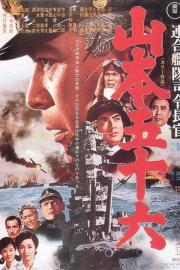
As Japan joins in a political pact with Nazi Germany and fascist Italy, Admiral Isoroku Yamamoto is appointed supreme commander of the Japanese fleet. With Japan headed inexorably toward war, Yamamoto, despite his misgivings, believes the only possible victory lies in destroying the American fleet by surprise at Pearl Harbor. The attack succeeds, but fails to sink the American carrier fleet.

The true story of an ordinary twenty-three year old who crossed the Pacific in a small yacht, a feat which no Japanese had ever accomplished. (imdb)

Bushido, a.k.a. "The Way of the Warrior" is the chivalrous code of the samurai that has influenced the Japanese way-of-life for centuries. This epic film spans several generations of a typical samurai family, and illustrates the intricate system of loyalty, honor and sacrifice which bound the samurai in ages past, and which, in many ways, persists to this very day. (amazon)

Kiyo, a devoted mistress who runs a modern Tokyo bar, faces a devastating crisis when her longtime lover's wife demands full custody of their young children. Forced to confront her precarious position in a traditional society, she must decide whether to fight for her legal rights and motherly love or sacrifice her personal happiness to protect her children's future.
A woman brings her injured daughter to the hospital, only to realize that the doctor is the estranged father of her child.

A grieving young man infiltrates a corrupt corporate empire by marrying the vice president's daughter, meticulously planning to expose the executives responsible for his father's forced suicide. As he uses insider access to orchestrate a complex web of psychological revenge, he faces moral dilemmas and mounting danger from the powerful men who will stop at nothing to conceal their crimes.
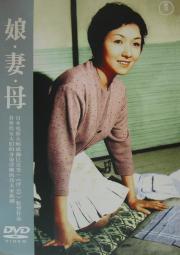
Sanae Sakanishi, widowed at the film's outset is left a substantial inheritance that soon becomes the instigator of much familial discord. (Slant)

A kind of modern dress "Donzoko" "The Lower Depths", about slum life in Osaka, where a greedy widow (Mimasu) takes advantage of her poor roomers, including her own son, who makes a meagre living stripping taxicabs.

A story told through the eyes of an elder sister of her childhood with her younger brother.

In the Ginza district of Tokyo, a widowed hostess struggles to maintain her dignity and independence while navigating the demanding nightlife. As she faces pressure to marry or start her own business, she must balance her personal morals with the harsh economic realities of her profession. The narrative captures a poignant look at the limited choices available to women in post-war Japan.

Study of the relationship between children of the Ainu tribe in Hokkaido and their pure Japanese neighbours and schoolmates. (bfi.org.uk)
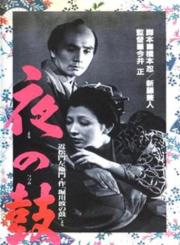
When a married woman has an affair with a young musician, feudal Japanese law requires that both offenders pay with their lives. However, the woman's husband blames himself for his wife's straying and attempts to thwart the law demanding capital punishment. (imdb)

Hyodo Reiko, a restless young woman whose arthritic left arm makes her feel like an outcast, begins an affair with Katsuragi, an unhappy middle-aged architect whose wife, Akiko, is having an affair with a Young medical student. Intrigued by Akiko, Reiko spies on her; insecure in her relationship with Katsuragi, Reiko taunts him about his wife's infidelity...

This film from the great Naruse has her stretching her acting muscles, playing Oshima, a woman who goes through situations in which men treat her wrong. Somehow, in a sometimes fun way, she emerges intact and stronger. (imdb)
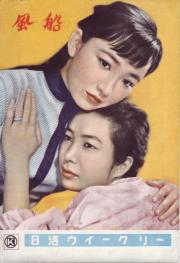
Haruki Murakami (Masayuki Mori), once lionized as a master painter, is now the president of a thriving camera company where his son Keikichi (Tatsuya Mihashi) is also employed as one of the department heads. His daughter Tamako (Izumi Ashikawa) has suffered from a fragile constitution ever since she contracted polio as a little girl, and spends much of the time secluded in her room where she immerses herself in her drawings. (KG)

Fumiko, mother of two children and wife of an unfaithful man who shows a low self esteem, shares her family life with her asleep vocation as a poetess. The beginning of her successful literary career coincides with her divorce and the development of a serious illness: a breast cancer, which leads her to lose her breasts. In the last stage of her life she meets a young journalist arrived from Tokyo, an admirer of her work, who want to write a story on her life. Both live a secret love history. (imdb)
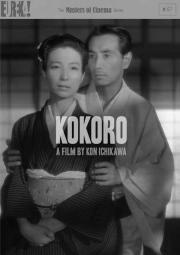
Why does Nobuchi visit the grave of his old friend Kaji? Why is he so secretive with his wife Shizu ? And how does Nobuchi's friendship with the young student Hioki - for whom the older man acts as reluctant sensei - relate to his time with Kaji? As the Meiji Era draws to a close with the emperor's death and the suicide of General Nogi, a fateful tale of tainted love, failed friendship, and redemptive honor unravels with tragic consequences. (MoC)

Returning to a devastated postwar Tokyo, Yukiko seeks out Kengo, a married forestry engineer with whom she had a passionate affair during World War II in occupied French Indochina. Disillusioned to find him unwilling to leave his wife, she becomes trapped in a toxic, destructive cycle of reunion and betrayal, clinging to memories of a past that no longer exists in a ruined nation.

In eighth century China, the Emperor is grieving over the death of his wife. The Yang family wants to provide the Emperor with a consort so that they may consolidate their influence over the court. General An Lushan finds a distant relative working in their kitchen whom they groom to present to the Emperor... (imdb)

Before government censorship was instituted full force in 1928, the proletarian novel was the ascendant form in Japanese prose. Takiji Kobayashi was the leading writer in this genre, which attempted to expose the oppression of the lower classes, until he was murdered in prison by the government in 1933. So Yamamura's The Crab-Canning Ship is based on one of Kobayashi's better-known novels. A group of sailors is forced to work under unbearable conditions on a Japanese fishing vessel.

Based on a screenplay by Keinosuke Kinoshita, "Koibumi" explores the wounds of war, the limits of love and the need to forgive. (imdb)

In Older Brother, Younger Sister, director Mikio Naruse's adaptation of an oft-filmed popular novel by Saisei Murô, the eldest daughter (Machiko Kyô) of a rural family comes home pregnant, testing some already tenuous family bonds. (Slant Magazine)

In the civil wars of 16th century Japan, two ambitious peasants want to make their fortunes. The potter Genjuro intends to sell his wares for vast profits in the local city, while his brother-in-law Tobei wishes to become a samurai (imdb)

The picture belongs to the jidai gekki (historic) genre. It is a powerful story of violence and eroticism, picturing a world at once sordid and poetic, with two central themes which intermingle to compound an admirable panel of a critical period in Japanese history: the great famine in the mid 19th Century. (imdb)

In The Good Fairy Kinoshita juxtaposes two extremes - the smarmy world of tabloid journalism and the hero's (Rentaro) romantic longings for a sweet 19 year old girl who is scheduled to die within the next few months. She has no prospect of future life and her family is poor, which means that loving her makes absolutely no practical sense at all. If she dedicates herself to him, it is an easy dedication; with only a few months to live, she has nothing to lose. (Fully Reconditioned)

Kameda, who has been in an asylum on Okinawa, travels to Hokkaido. There he becomes involved with two women, Taeko and Ayako. Taeko comes to love Kameda, but is loved in turn by Akama. When Akama realizes that he will never have Taeko, his thoughts turn to murder, and great tragedy ensues. (imdb)

About a woman trapped into upholding the family tradition and moral values just after the end of WW2.

Under the shelter of Kyoto's ruined gate, a woodcutter, a priest, and a commoner reflect on a harrowing crime. The murder of a samurai and the assault of his wife are recounted through four conflicting perspectives: the accused bandit, the wife, the slain samurai via a medium, and an eyewitness. Each contradictory tale exposes human deceit and the elusive nature of truth.
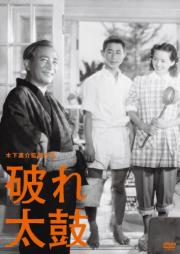
An early Kinoshita film in which the feudal traditions of the Japanese family unit are lightly satirized. Broken Drum was mentioned very positively as being "successful" by Donald Richie in his overviews of Japanese film. It was co-written by the great Kobayashi Masaki, and Narushima Toichiru worked on it as an assistant director (along with Kobayashi), who would go on to be an important new wave cinematographer for Oshima and Yoshida as well as a director in his own right. (Steven H)

Adaptation of Junichiro Tanizaki's novel whit the same name. It is perversely erotic relationship between a young salaryman and his teenage wife whom he 'adopted' at first as to 'train' her to be his idealistic modern woman.

After Japan's loss in the war, the wealthy, cultured, liberal Anjo family have to give up their mansion and their way of life. They hold one last ball at the house before leaving. (imdb)
Two sisters, one a dancer and the other a script supervisor at a big movie studio, become embroiled in union activities when a strike is called in sympathy with striking railroad workers, one of whom boards with the sisters and their parents. The girls' father argues with them about their strike, but finds his views changing when he himself loses his job. (imdb)

A fugitive lord and his bodyguards and followers, all disguised as monks, traverse a forest, where they must avoid capture and outsmart the border guards. (imdb)

Three IJN flyers Mikami (Susumu Fujita), Kawakami (Masayuki Mori) and Murakami (Akitake Kono) are good friends, and they are all renowned for their torpedo techniques. Mikami is posted as a staff officer at a base on an island in the Pacific. Kawakami and Murakami later joins him as the base squardron is reinforced. The enemy task force approaches the island and all three of them attack the fleet, killing themselves in the process. (imdb)
Streaming data provided by 